 AJMNAssociated Journalism & Media Network
Hyperloop Transportation Nears Reality: The Global Race to Build the World’s First 1,000 km/h Travel System
The concept of hyperloop transportation, passenger pods traveling through low-pressure tubes at airline speeds has shifted from theoretical ambition to a global technological race. What began as an experimental idea a de...
A Futuristic Dream Is Becoming a Global Engineering Battle
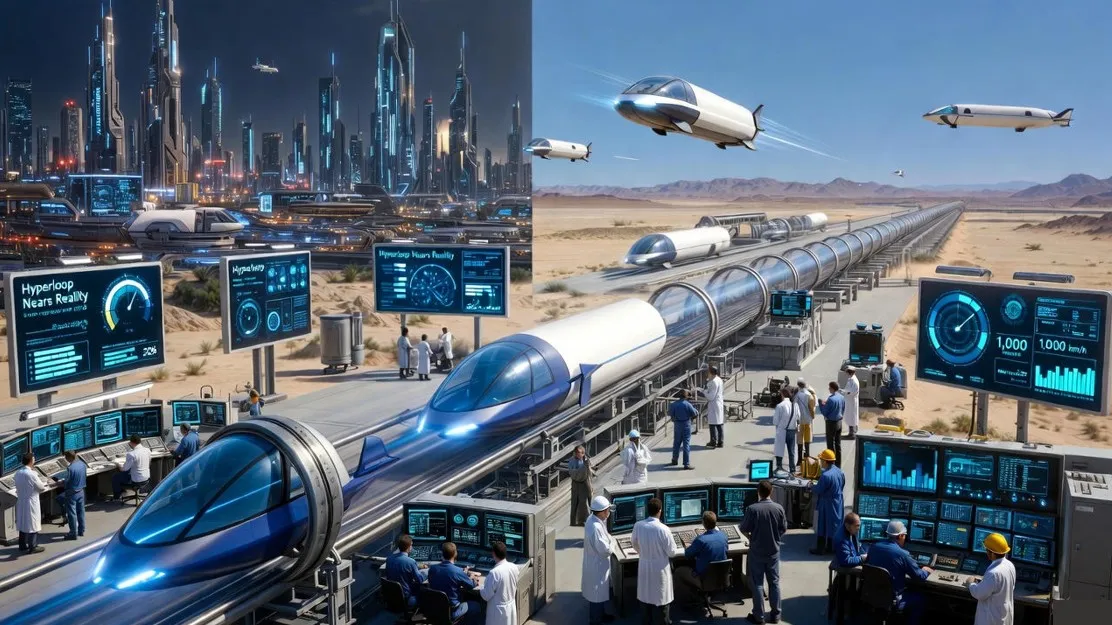
The concept of hyperloop transportation, passenger pods traveling through low-pressure tubes at airline speeds has shifted from theoretical ambition to a global technological race.
What began as an experimental idea a decade ago is now one of the most ambitious infrastructure programs on the planet, backed by governments, tech companies, and sovereign investors.
With top speeds projected to exceed 1,000 km/h, the hyperloop could redefine how cities, nations, and continents connect.
Why Hyperloop Is Attracting Global Interest
Hyperloop technology promises a combination of speed, efficiency, and environmental benefits unmatched by any existing transportation system.
Near-Supersonic Speed
Passenger pods may reach speeds faster than commercial jets, enabling trips such as:
- Dubai to Riyadh in under 50 minutes
- Los Angeles to San Francisco in 45 minutes
- Paris to Berlin in less than an hour
Zero Direct Emissions
Magnetic levitation and electric propulsion eliminate fossil fuel use, aligning with national climate agendas.
Lower Operating Costs
Once operational, hyperloop systems require significantly less energy per passenger than trains, planes, or cars.
New Economic Corridors
Ultra-fast travel compresses geography, creating new cross-border economic zones and reshaping labor markets.
Who Is Leading the Hyperloop Race?
United Arab Emirates
The UAE continues to be one of the most aggressive backers, conducting feasibility studies for links between Dubai, Abu Dhabi, and Saudi Arabia.
India
India’s planned Mumbai–Pune hyperloop corridor, now undergoing regulatory review, could become one of the world’s first commercial systems.
United States
Several states including Nevada, California, and Ohio are testing routes and safety standards with federal oversight.
Europe
The EU is funding next-generation mobility research, with proposals linking major capitals through continental hyperloop lines.
China
China is developing its own closed-track hyperloop prototypes, aiming to integrate them into national high-speed rail networks.
Challenges Slowing the Path to Commercial Launch
Despite rapid progress, hyperloop implementation faces major hurdles:
- High upfront construction costs
- Safety certification for vacuum-sealed tubes
- Urban land rights and long-distance infrastructure planning
- Standardization of international regulations
- Engineering challenges in maintaining ultra-low pressure over long distances
Most experts predict the first fully operational hyperloop could debut between 2030 and 2035, depending on regulatory approval and funding.
Why Hyperloop Matters for the Future of Cities
If successful, the hyperloop will transform how societies function.
Urban Decentralization
People could live 200–300 km away from their jobs and still commute in minutes.
Sustainable Travel
The system aligns with global energy transition strategies, reducing transportation emissions significantly.
New Global Mobility Industry
Hyperloop companies, component suppliers, tube manufacturers, and AI-based control systems could form a trillion-dollar ecosystem.
Crisis Response & Emergency Use
High-speed freight pods could deliver medical supplies or critical goods across countries within minutes.
Conclusion: The Hyperloop Is No Longer Science Fiction
The hyperloop stands at the intersection of engineering, economics, and national ambition.
While challenges remain, the pace of global investment signals a future where ultra-fast, emission-free travel becomes a defining feature of modern civilization.
The next transportation revolution has already begun quietly, inside a vacuum tube.